
Why Are My Floors Sticky After Mopping? Causes and Solutions
Updated: Aug 3
Sticky floors after mopping are usually caused by residue buildup, dirty mop water, incorrect cleaner dilution, or using the wrong cleaning products. Here's how to identify the cause and prevent it from happening again.
Watch Ryan Explain:
Prefer Reading?
Full article begins here:
Short Answer:
Floors are usually sticky after mopping because of residue left behind from cleaning products, dirty mop water, grease buildup, soap film, or using the wrong cleaner for the surface. In many cases, the floor isn't actually dirty anymore. It's the leftover residue that creates the sticky feeling.
If your floors feel tacky after cleaning, the most common causes include overusing cleaning products, failing to change mop water often enough, residue from cooking oils and tracked-in dirt, or using a cleaner that leaves a film behind. The good news is that sticky floors can usually be fixed by removing the buildup and switching to a residue-free cleaning process.

The Most Common Causes of Sticky Floors After Mopping
Several factors can cause floors to feel sticky after cleaning. In most cases, the issue comes down to residue being left behind on the surface.
1. Residue Buildup
Residue buildup is one of the leading causes of sticky floors.
Over time, floors collect more than just visible dirt. Cooking oils, grease, airborne contaminants, tracked-in soil, pet residue, and previous cleaning products can all accumulate on the surface.
When these contaminants aren't fully removed, they leave behind a film that can feel sticky or tacky.
Common sources of residue include:
Cooking grease in kitchens
Foot traffic and tracked-in dirt
Pet oils and dander
Soap-based cleaning products
Improperly rinsed floor cleaners
The more residue that accumulates, the more likely your floor is to feel sticky after cleaning.
2. Using Too Much Cleaner
Many people assume that using more cleaning solution will result in a cleaner floor.
Unfortunately, the opposite is often true.
When floor cleaners are mixed stronger than recommended, excess product remains on the floor after drying. This leftover cleaner becomes a sticky film that attracts dirt and makes floors feel dirty again quickly.
Always follow the manufacturer's dilution recommendations rather than assuming more product equals more cleaning power.
3. Dirty Mop Water
One of the most overlooked causes of sticky floors is dirty mop water.
Think of it this way: if you're mopping with water that's already loaded with dirt, grease, and contaminants, you're essentially spreading that contamination across the floor.
In residential settings, mop water may need to be changed multiple times during a single cleaning session.
In commercial environments, large areas often require several buckets of fresh water to maintain effective cleaning.
Signs your mop water should be changed:
Water appears cloudy or dark
Water develops an odor
Mop leaves streaks behind
Floors feel sticky after drying
Fresh water makes a significant difference in final cleaning results.
4. Using the Wrong pH Cleaner
Not all floor cleaners are created equal.
A cleaner with an excessively high pH can leave behind alkaline residue that attracts soil and creates a sticky surface.
Conversely, a cleaner with the wrong chemistry for the flooring type may not effectively remove contaminants, allowing buildup to remain behind.
Using a properly balanced cleaner helps prevent residue while providing effective cleaning performance.
5. Soap Film Left Behind
Many traditional floor cleaning products contain soaps or detergents that can leave a film on the surface.
If that film isn't thoroughly rinsed away, floors may feel sticky even though they appear clean.
Over time, soap film can build layer upon layer, making the problem progressively worse.
This is especially common when:
Too much cleaner is used
Floors aren't rinsed properly
Soap-based cleaners are used repeatedly
Dirty mop water is reused
How to Prevent Sticky Floors
The best way to prevent sticky floors is to focus on residue-free cleaning practices.
Follow these simple guidelines:
Use Proper Dilutions
Always follow label directions when mixing cleaning products.
Change Mop Water Frequently
Clean water removes soil. Dirty water redistributes it.
Consider a Two-Bucket System
One bucket contains cleaning solution while the second bucket is used for rinsing the mop. This helps reduce contamination and improves cleaning results.
Use a Residue-Free Cleaner
Products designed to clean without leaving behind soap film or residue can help eliminate sticky floor issues entirely.
Our Recommended Solution: Neutral Cleaner
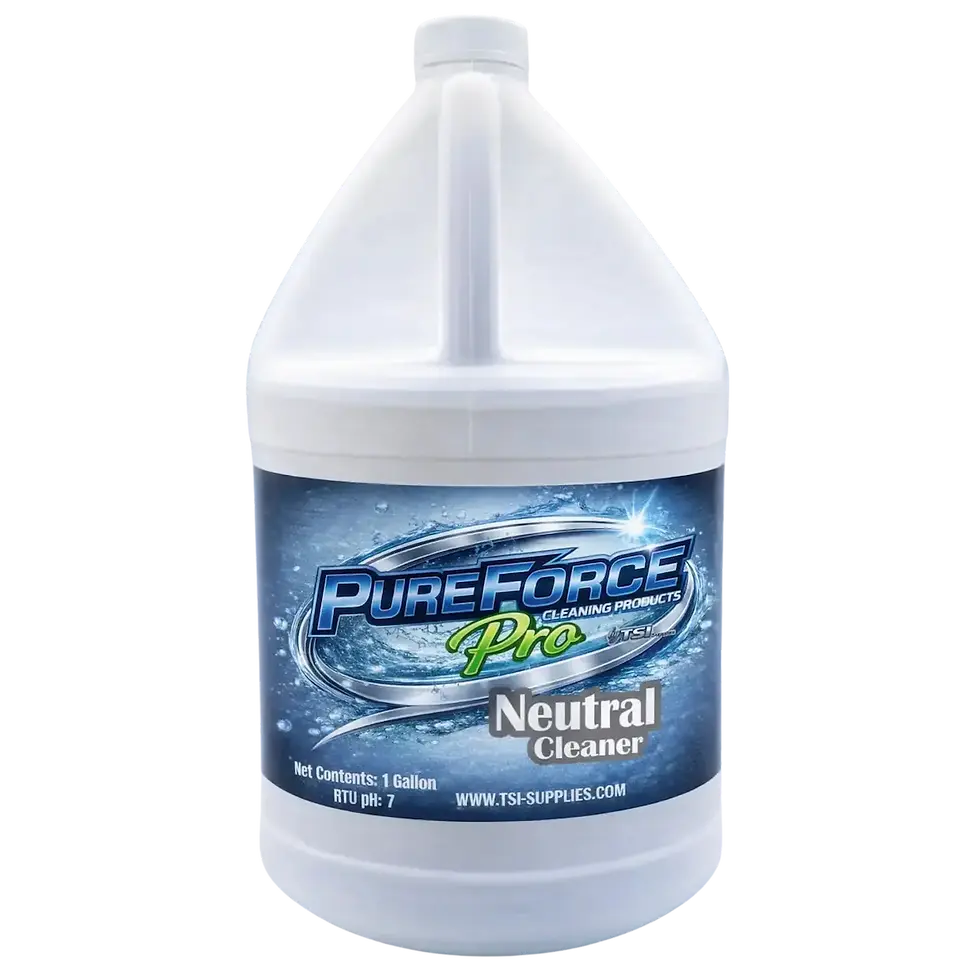
One product we frequently recommend is Neutral Cleaner from PureForce.
Neutral Cleaner was originally developed as a neutral floor cleaner but has become a favorite because of its versatility and residue-free performance.
Benefits include:
Leaves no sticky residue behind
Safe for routine floor maintenance
Highly concentrated at only 2 ounces per gallon
Available in ready-to-use and concentrate versions
Available in Lemon, Watermelon, and Tropical Paradise fragrances
Neutral Cleaner can
be used on:
Luxury Vinyl Plank (LVP)
Engineered wood floors
Laminate flooring
Tile and grout
Carpet
Many other water-safe surfaces
Because it cleans effectively without leaving behind a film, it's an excellent choice for preventing sticky floors after mopping.
Final Thoughts
If your floors feel sticky after mopping, the problem is usually not the floor itself. More often, it's residue buildup, dirty mop water, improper dilution, soap film, or using the wrong cleaning product.
By using fresh water, proper dilution ratios, and residue-free cleaners, you can leave floors clean, fresh, and truly residue-free after every cleaning.
FAQ Section
Why do my floors feel sticky after mopping?
Sticky floors are usually caused by cleaner residue, dirty mop water, or using too much cleaning product. As the residue dries, it leaves behind a film that attracts dirt and makes the floor feel tacky instead of clean.
Can using too much floor cleaner make floors sticky?
Yes. More cleaner doesn't mean cleaner floors. Using more than the recommended amount often leaves excess residue behind, creating a sticky surface that attracts dust, dirt, and footprints.
Why are my floors still dirty after I mop?
If your floors still look dirty after mopping, the problem is often residue or dirty mop water being spread across the surface. Changing mop water regularly and using a residue-free cleaner helps remove soil instead of redistributing it.
How often should I change my mop water?
For most homes, mop water should be changed at least once during kitchen cleaning and more often for heavily soiled areas. Commercial facilities typically require several water changes to avoid spreading dirt and residue.
What type of floor cleaner prevents sticky residue?
A residue-free neutral floor cleaner is usually the best choice. These cleaners remove soil without leaving behind soap film or sticky buildup, helping floors stay cleaner longer.
Can dirty mop water make my floors worse?
Yes. Once mop water becomes dirty, it can spread soil, grease, and cleaning residue back across the floor. This often causes streaking, haze, and sticky spots instead of a clean finish.
How do professionals keep floors from becoming sticky?
Professional cleaners prevent sticky floors by using the proper dilution, changing mop water frequently, using residue-free cleaners, and thoroughly removing soil instead of leaving cleaning product behind.
Does Arizona hard water make floors look dull or sticky after mopping?
Homeowners throughout Phoenix, Glendale, Peoria, Surprise, Goodyear, Avondale, and the West Valley often assume Arizona's hard water or desert dust is causing their floors to feel sticky after mopping. While those conditions can make residue and dirt more noticeable, the most common cause is using too much floor cleaner, dirty mop water, or a cleaner that leaves behind a residue. Using a properly diluted, residue-free neutral cleaner and changing mop water regularly helps keep hard floors cleaner without the sticky film that attracts dirt.


Comments